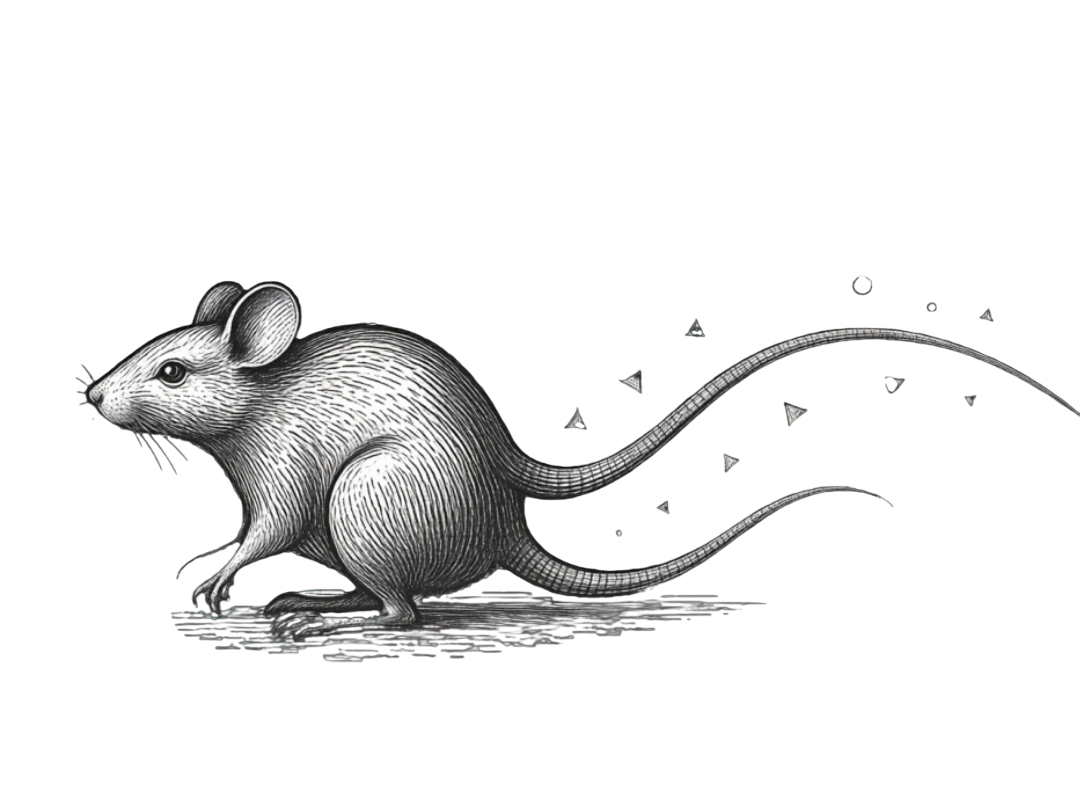
Imagine cleaning out a long-forgotten garden shed or sweeping up a dusty attic. It is a mundane chore, a brief moment of domestic maintenance. But in the microscopic world, you have just triggered a silent explosion. As your broom disturbs the air, invisible particles—dried remnants of rodent life—swirl into your lungs. You don’t feel the invasion. There is no immediate cough, no sting. But the “Ghost in the Dust” has found a new host.
For decades, the medical world has focused its anxieties on high-profile respiratory threats like influenza or coronaviruses. Yet, as we move through 2026, a different kind of shadow is lengthening. Hantaviruses, once confined to the fringes of rural medicine and “freak” ecological outbreaks, are emerging as a primary concern for the era of Ecological Medicine. These are not just viruses; they are biological opportunists that exploit the thinning veil between human civilization and the wild.
The Stealth Invader: Aerosolization and Anatomy
To understand the Hantavirus, we must look at how it bridges the gap from the animal kingdom to the human bloodstream. Unlike many viral threats, Hantaviruses do not require a “middleman” like a mosquito or a tick. They rely on the wind.
The Transmission Loop
Hantaviruses are primarily carried by rodents—deer mice, cotton rats, and bank voles. The virus lives in a state of evolutionary truce with these hosts, rarely making them ill. However, the virus is shed continuously in the animal’s saliva, urine, and feces.
- The Desiccation Phase: Once excreted, the virus can survive in a dried state for days.
- Aerosolization: When the dried material is disturbed, the viral particles become airborne.
- The Inhalation: Humans inhale these microscopic “ghosts,” which travel deep into the lower respiratory tract.
The Molecular Blueprint
Under the microscope, the Hantavirus is a masterpiece of minimalist design. It is an enveloped RNA virus belonging to the family Bunyaviridae. Its genome is split into three unique segments, which scientists refer to using LaTeX for precision:
- The $S$ (Small) segment: Encodes the nucleocapsid protein, which protects the viral RNA.
- The $M$ (Medium) segment: Encodes the envelope glycoproteins ($Gn$ and $Gc$) that act as the keys to unlock human cells.
- The $L$ (Large) segment: Encodes the viral polymerase, the engine that drives replication once inside the host.
The Two Faces of the Virus: HPS vs. HFRS
In the spirit of 20th-century medicine, we often look for a single “cure.” But Hantaviruses present a dual-threat profile depending on where they are encountered.
1. Hantavirus Pulmonary Syndrome (HPS)
Predominant in the Americas, HPS is the “Surgical Strike” of the virus world. It targets the lungs with terrifying efficiency. After an incubation period of one to five weeks, the patient experiences flu-like symptoms that rapidly escalate into acute respiratory distress. The virus doesn’t just damage cells; it tricks the human immune system into a “Cytokine Storm,” causing the capillaries in the lungs to leak fluid. The patient, quite literally, drowns from within. In 2026, the mortality rate for HPS remains stubbornly high, often exceeding 35-40%.
2. Hemorrhagic Fever with Renal Syndrome (HFRS)
More common in Europe and Asia, HFRS takes a different tactical route. Instead of the lungs, it besieges the kidneys. It manifests as intense back pain, hypotension, and, in severe cases, internal bleeding and kidney failure. While the mortality rate is lower than HPS (ranging from 1% to 15% depending on the strain), the long-term “fitness cost” to the survivor’s renal system can be devastating.
The 2026 Update: Al-Driven Biosurveillance
The primary challenge with Hantaviruses has always been the Predictive Gap. Because outbreaks are tied to rodent population “booms” (often following heavy rainfall or changes in land use), they seemed random. In 2026, however, we are seeing the rise of Digital Ecology.
- The Process: Satellite imagery and IoT (Internet of Things) ground sensors monitor moisture levels and seed production in forest floors.
- The Match: AI algorithms correlate this ecological data with rodent breeding cycles. By predicting a “masting” event (an overabundance of forest seeds), we can now predict a Hantavirus surge six months before the first human case appears.
- The Delivery: Local health authorities in “hot zones” receive automated alerts to begin public education and rodent mitigation efforts, shifting the strategy from Reactive Treatment to Proactive Prevention.
Evolutionary Steering: The “One Health” Approach
Critics of modern virology often argue that we are playing a losing game of “Whac-A-Mole” with emerging diseases. Hantaviruses prove that we cannot win through eradication; we must win through management.
One of the most significant breakthroughs in 2025 was the application of “One Health” principles to Hantavirus control. We have learned that when we destroy the natural predators of rodents—hawks, owls, and foxes—we inadvertently create a vacuum that the Hantavirus fills. By restoring local biodiversity, we create a “biological buffer.” In a balanced ecosystem, rodent populations remain stable, and the frequency of human-rodent interaction drops. We are moving away from the “grenade” approach of mass-poisoning rodents toward the “sniper” approach of ecological restoration.
The Regulatory & Clinical Hurdle: Living with RNA
As of 2026, we are finally seeing the clinical fruit of the mRNA revolution. While a universal Hantavirus vaccine has remained elusive due to the high mutation rate of the virus’s $M$ segment, researchers are now using Adaptive mRNA Platforms.
Instead of a static vaccine, these platforms allow scientists to “tweak” the vaccine’s code in real-time based on the specific strain circulating in a local rodent population. It is a “living defense” for a living threat. However, regulatory bodies like the FDA are still grappling with how to approve a vaccine that changes its “recipe” every season. The shift toward Dynamic Licensing is the final frontier in making these treatments a reality.
Conclusion: A Return to Natural Balance
The “Post-Antibiotic Era” has taught us that we cannot simply kill our way out of microbial threats. Hantaviruses remind us that our health is inextricably linked to the health of the dust, the forest, and the mouse.
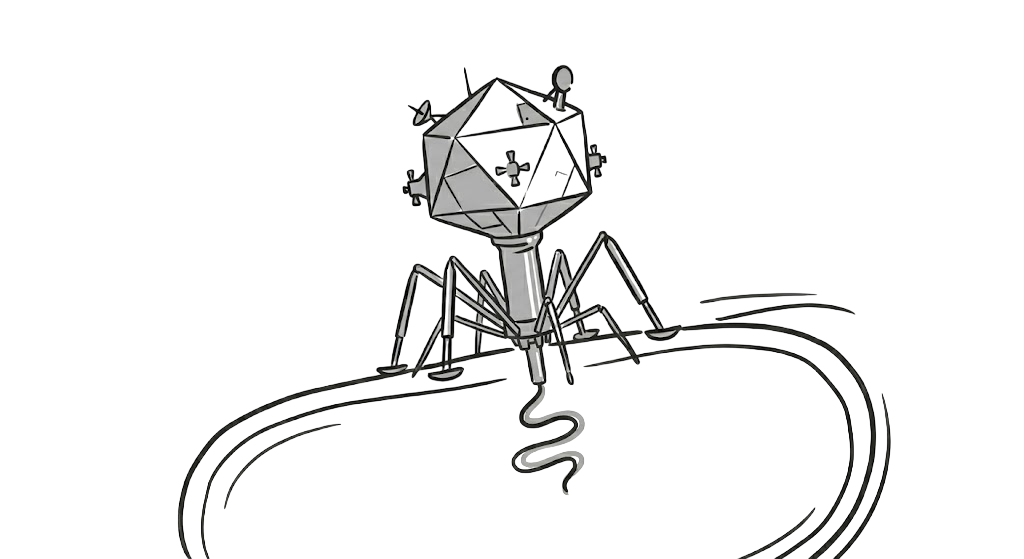
By harnessing AI for biosurveillance and embracing the complexity of ecological medicine, we are turning a “death sentence” into a solvable puzzle. The bacteriophage might be the precision assassin of the bacterial world, but in the viral realm, our best weapon is intelligence—the ability to see the ghost in the dust before it takes its first breath.
– written by Abrar Sayeed
Want to go deeper?
- Spillover: Animal Infections and the Next Human Pandemic – David Quammen (A masterpiece on how viruses like Hantavirus “jump” from animals to humans).
- The Ghost Map of the 21st Century – Research on how climate change is shifting rodent habitats into urban centers.
- Journal of Virology: 2026 Perspective – A meta-analysis of the efficacy of mRNA platforms against Bunyaviridae.
- The One Health Initiative – Exploring the global strategy of linking human, animal, and environmental health.