Ever felt your smartphone burning through your pocket during a humid July afternoon in Dhaka? Or noticed how the electric “Easy-Bikes” in your hometown seem to lose their “zip” after just a year of service? For a decade, we’ve blamed the hardware, the chargers, or the “cheap” imports. But the culprit has always been more fundamental: Lithium.
As of April 2026, the chemical landscape of the world is shifting. We are witnessing the “Great Salt Shift”—a transition from the expensive, heat-sensitive lithium-ion battery to the resilient, abundant Sodium-Ion alternative. For most of the world, this is a curiosity. For Bangladesh, it is a revolution. From the salt pans of Cox’s Bazar to the crowded streets of Mirpur, the “People’s Battery” is finally here.
The Thermal Wall: Why Lithium Fails the Tropics
To understand why sodium is winning in 2026, we first have to understand why lithium is losing. Lithium-ion batteries are like high-performance athletes: they are incredible under perfect conditions but “wilt” in the heat.
In a laboratory in Sweden, a lithium battery is a miracle. But in a 40°C Bangladeshi summer with 90% humidity, lithium begins a slow process of self-destruction. High heat causes “dendrites”—tiny, microscopic spikes—to grow inside the battery. These spikes eventually puncture the internal separators, leading to “capacity fade” (your battery doesn’t hold a charge) or, in extreme cases, Thermal Runaway (fire).
The Sodium Edge: Sodium-ion batteries, by contrast, are chemically robust. Recent 2026 field data from the Bangladesh Renewable Energy Institute shows that sodium-ion cells maintain 95% of their efficiency even when the internal temperature of a vehicle hits 50°C. In our climate, sodium isn’t just a cheaper option; it’s a safer, longer-lasting one.
The “Naxtra” Milestone: The Tech That Changed 2026
For years, sodium was the “underdog” because it was too heavy. Sodium ions are physically larger than lithium ions, meaning you needed a massive battery to get the same range.
That changed in early 2026 with the mass rollout of CATL’s Naxtra Gen-2 platform. By utilizing a “Prussian White” cathode—a molecular structure that acts like a spacious parking garage for ions—engineers have pushed sodium’s energy density to 175 Wh/kg.
While this still won’t power a long-haul flight or a high-end gaming laptop as well as lithium, it has hit the “Goldilocks Zone” for everyday transport. It is now energy-dense enough to power a car for 300km or an Easy-Bike for two full days of passenger ferrying.
Economic Sovereignty: From the Bay of Bengal to the Battery
Perhaps the most compelling argument for sodium in the Bangladeshi context is the Dollar Crisis and supply chain independence. Lithium is often called “The New Oil.” Its mining is concentrated in a few countries, and its price is subject to the whims of global geopolitics.
Sodium, however, is the primary component of common salt.
The 2026 Economic Shift: While Bangladesh must spend precious foreign reserves to import lithium, we are sitting next to an infinite supply of sodium in the Bay of Bengal. This year, we’ve seen the first pilot projects in Chittagong exploring “Battery-Grade Sodium Refinement.”
By moving our energy grid toward sodium, we aren’t just changing our chemistry; we are decoupling our energy future from global price volatility. In 2026, raw sodium-ion cells are costing roughly 30-40% less to manufacture than their lithium counterparts. This is the difference between an EV being a luxury for the elite and a tool for the masses.
The “Zero-Volt” Shield: Safety in the Monsoon
Safety in Bangladesh has unique challenges. Our batteries don’t just face heat; they face monsoon floods, bumpy rural roads, and high-density urban storage.
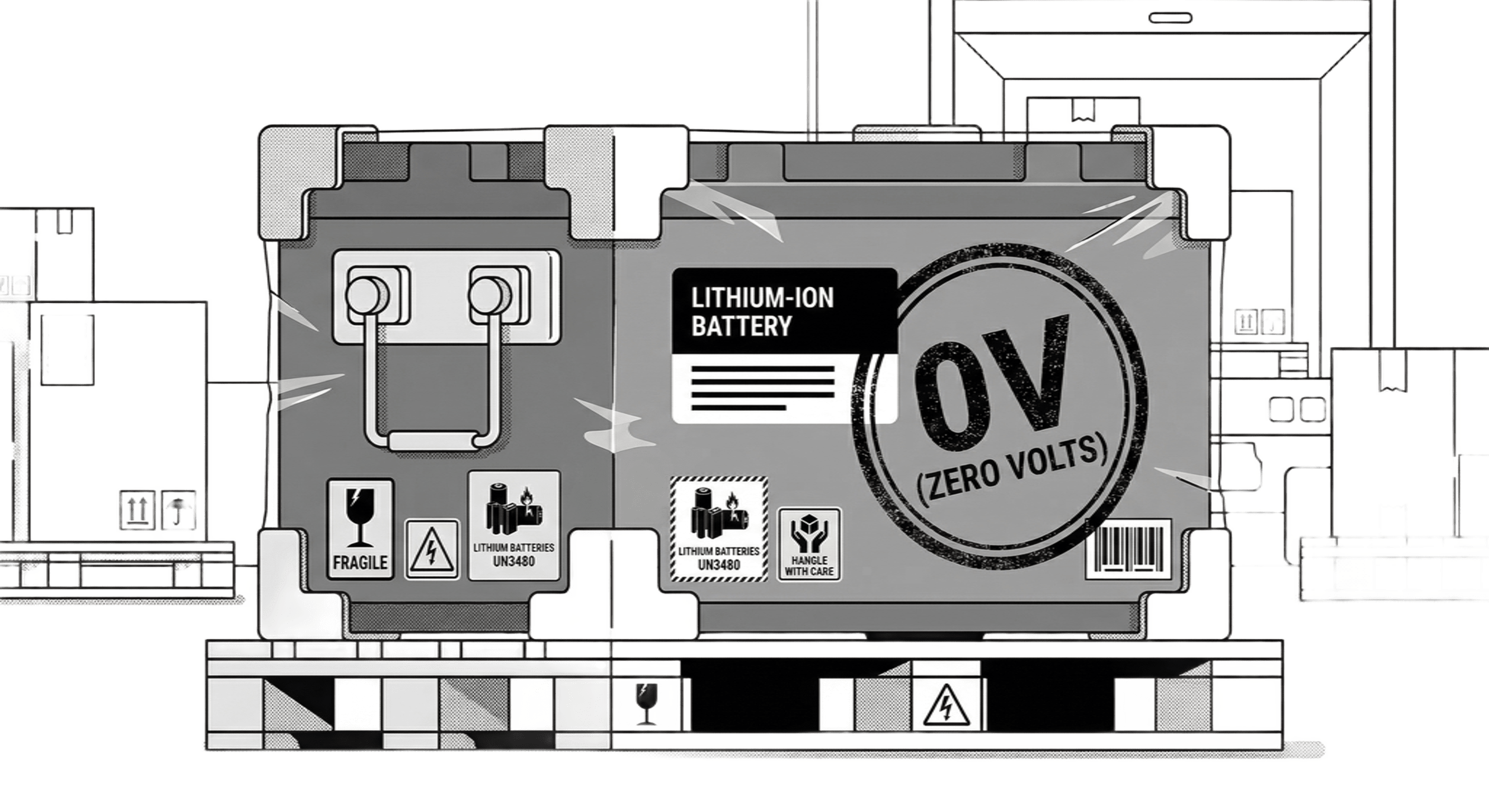
Lithium batteries are notoriously dangerous to transport. They must be shipped with a “State of Charge” (usually 30%) because if they drop to zero, they die permanently. This means every shipping container of lithium batteries is essentially a “live” fire hazard.
The Zero-Volt Advantage: Sodium-ion batteries are Zero-Volt Stable. You can fully discharge them to 0% for shipping, storage, or maintenance. They can sit in a humid warehouse for months with no risk of fire and no loss of health. For a logistics network like ours—which often faces delays and infrastructure hurdles—this “fail-safe” nature is a game-changer.
The “Two-Tier” Energy Future
In 2026, we are realizing that the world doesn’t need one battery to rule them all. Instead, we are seeing a “Two-Tier” system:
- Lithium (The Premium Tier): Reserved for flagship smartphones, lightweight drones, and high-performance luxury cars where every gram of weight matters.
- Sodium (The Utility Tier): Powering the “workhorses” of society. This includes the electric rickshaws, the municipal buses, and, most importantly, Solar Home Systems (SHS).
In rural Bangladesh, the transition to sodium has been the most dramatic. Lead-acid batteries (which are toxic and heavy) and lithium batteries (which are expensive) are being replaced by sodium-ion blocks that can survive the heat of a tin-roofed house while providing 24/7 power for a fraction of the price.
The Verdict: A Seasoned Delta
The story of STEM in 2026 isn’t just about AI or space travel; it’s about the democratization of energy. For a long time, the “Electric Future” felt like something designed for the cold, wealthy cities of the North.
But with the rise of Sodium-Ion, the narrative has flipped. We have found a technology that loves the heat, thrives in the humidity, and utilizes the very salt that laps against our shores. As we move further into 2026, the question isn’t whether we can afford to switch to electric. The question is: why would we ever go back to lithium?
The future of the Delta is bright, it’s resilient, and it’s seasoned with salt.
— written by Abrar Sayeed
Want to go deeper?
- The Naxtra White Paper (2026): A technical deep dive into Prussian White cathode efficiency.
- The Bay of Bengal Project: How local refineries are attempting to produce battery-grade sodium by 2028.
- Heat vs. Health: A study by the Dhaka Engineering University on battery degradation in tropical humidity.
- Zero-Volt Logistics: Why shipping companies are lobbying for a “Sodium-First” policy in high-density ports.
- The 2026 Easy-Bike Census: Data showing the 60% uptick in “Salt-Powered” conversions in South Asia.