We all know someone who absolutely swears by a cure that science says shouldn’t work. Maybe it is an uncle who wears a copper bracelet to cure his joint pain, a friend who relies on homeopathic sugar pills for their allergies, or a neighbor who insists a specific gemstone brought them out of a depressive slump.
When you point out that these remedies have no scientific backing, their response is almost always the same: “I don’t care what the studies say, it worked for me!”
And here is the fascinating, slightly uncomfortable truth: they probably aren’t lying. They really do feel better. But the reason why they feel better is one of the most incredible, misunderstood phenomena in human biology. It’s not the copper, the sugar pill, or the gemstone.
It is the human brain.
To understand how pseudoscience and alternative medicine survive in the modern world, we have to explore the neurobiology of belief and the invisible cognitive biases that govern how we perceive reality. We have to talk about the placebo effect.
The Brain’s Internal Pharmacy
For a long time, the word “placebo” (Latin for “I shall please”) was used dismissively. If a doctor said a patient’s recovery was just a placebo effect, it meant the illness was “all in their head.” Today, neuroscience tells a vastly different story. The placebo effect isn’t a trick of the imagination; it is a measurable, physical neurological response.
During World War II, an American anesthesiologist named Henry Beecher ran out of morphine while treating wounded soldiers. Desperate, a nurse injected a soldier with plain saline water but confidently told him it was a powerful painkiller. To Beecher’s shock, the soldier calmed down, his heart rate stabilized, and he reported a massive drop in pain.
How does water kill pain? It doesn’t. But the belief in the medicine triggered a cascade of chemical events in the soldier’s brain.
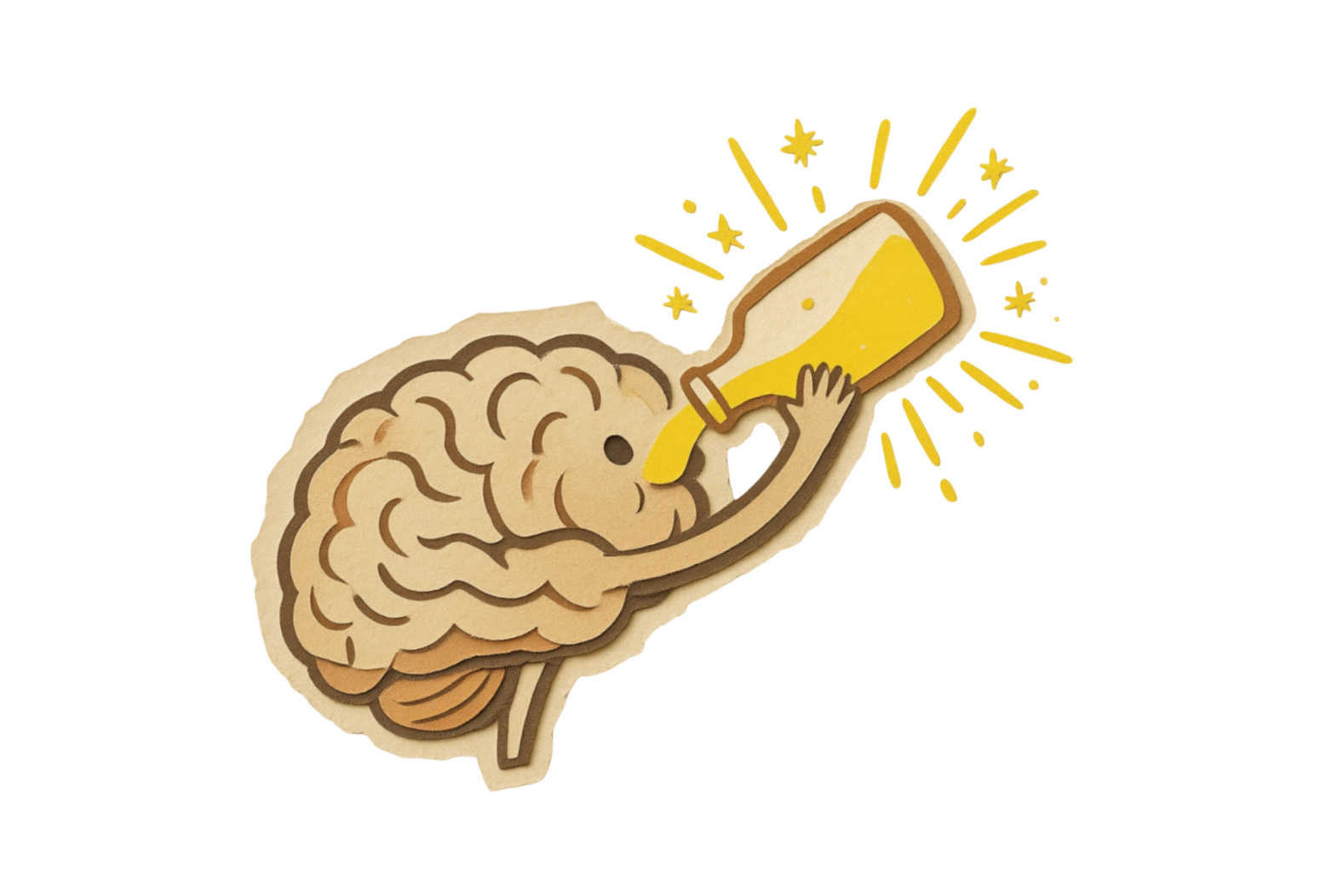
When you believe you are receiving a treatment, your brain’s prefrontal cortex (the area responsible for complex thought and anticipation) communicates with deeper brain regions like the amygdala and the brainstem. If the brain expects pain relief, it releases natural, built-in painkillers called endorphins and enkephalins. These chemicals bind to the exact same opioid receptors in the brain that morphine does.
Simultaneously, the expectation of a reward (feeling better) causes the brain to release dopamine, which boosts mood and reduces anxiety. When someone takes a homeopathic pill for a headache and feels better 20 minutes later, the relief is real. But it was their own brain, not the pill, that manufactured the cure.
Why Do We Fall for Pseudoscience?
If the placebo effect explains why fake treatments feel good, cognitive biases explain why we become convinced these treatments are actually curing us. Our brains are spectacularly evolved pattern-recognition machines. We are wired to connect cause and effect to survive. However, this wiring has a few massive blind spots.
Here are the three main culprits that trick us into believing in pseudoscience:
1. Regression to the Mean
Most illnesses—like the common cold, lower back pain, or a bout of eczema—are self-limiting. They fluctuate. You get sick, the symptoms peak in severity, and then your immune system fights it off and you return to your baseline health (the “mean”).
When do people usually try alternative medicine or strange superstitions? When their symptoms are at their absolute worst. Because they are at the peak of the illness, they were naturally going to get better anyway. But because they took the snake oil right before their body naturally recovered, they give the snake oil all the credit.
2. The Illusion of Causality (Post hoc ergo propter hoc)
This is a logical fallacy that translates to: “After this, therefore because of this.” If the rooster crows and then the sun comes up, a flawed brain assumes the rooster caused the sunrise. If you drink a special “detox tea” and your stomachache goes away, you assume the tea cured you. We ignore the dozens of other factors—hydration, natural digestion, the immune system, time—that were actually responsible.
3. Confirmation Bias
This is the granddaddy of all cognitive biases. Confirmation bias is our tendency to remember the hits and forget the misses. If you wear a “lucky” ring and have a good day at university, you remember it as proof the ring works. But what about the ten times you wore the ring and failed an exam or got stuck in horrible Dhaka traffic? You conveniently forget those instances.
Alternative medicine relies heavily on confirmation bias. People remember the one time the herbal charm seemed to cure their cough, but forget the three times it did absolutely nothing.
The Harm in “Harmless” Cures
You might be thinking: If the placebo effect makes people feel better, who cares if the cure is pseudoscience? What is the harm?
If someone uses a crystal to cure a mild headache, there is very little harm. But pseudoscience does not stop at headaches. When alternative medicines are marketed as cures for cancer, diabetes, or severe infections, the placebo effect becomes dangerous. A placebo can make you feel less pain, but it cannot shrink a tumor, produce insulin, or kill a bacterial infection.
When people abandon evidence-based medicine in favor of untested, unscientific remedies, they lose precious time. Diseases that could have been managed or cured by modern science are allowed to progress until it is too late.
A Polite but Rigorous Reality
It is incredibly important to be empathetic when discussing this. Falling for pseudoscience doesn’t mean someone is unintelligent; it just means they possess a human brain. We are all susceptible to cognitive biases. We all desperately want simple, magical solutions to complex, painful problems.
However, the beauty of the scientific method is that it is designed specifically to strip away our biases. Double-blind, randomized controlled trials exist exactly because we know the placebo effect is powerful. Science says: Let’s see if this medicine still works when the patient doesn’t know they are taking it.
By understanding the placebo effect, we don’t lose the magic of healing. Instead, we gain a profound appreciation for how powerful the human brain truly is, and we learn to demand real, evidence-based treatments for our bodies.
-Written by Abrar Sayeed
Want to go deeper?
- “Bad Science” by Ben Goldacre: A brilliant, funny, and accessible breakdown of how the media, alternative medicine practitioners, and even pharmaceutical companies misuse science to sell products.
- “The Demon-Haunted World: Science as a Candle in the Dark” by Carl Sagan: A timeless masterpiece on critical thinking. Sagan beautifully explains how to build a “baloney detection kit” to protect yourself from pseudoscience and superstition.
- “Thinking, Fast and Slow” by Daniel Kahneman: Written by a Nobel laureate, this is the ultimate guide to the two systems that drive the way we think, revealing the exact cognitive biases that trick us every day.
- “Trick or Treatment? Alternative Medicine on Trial” by Simon Singh and Edzard Ernst: A rigorous, polite, and completely evidence-based examination of acupuncture, homeopathy, chiropractic therapy, and herbal medicine to see what actually works and what doesn’t.