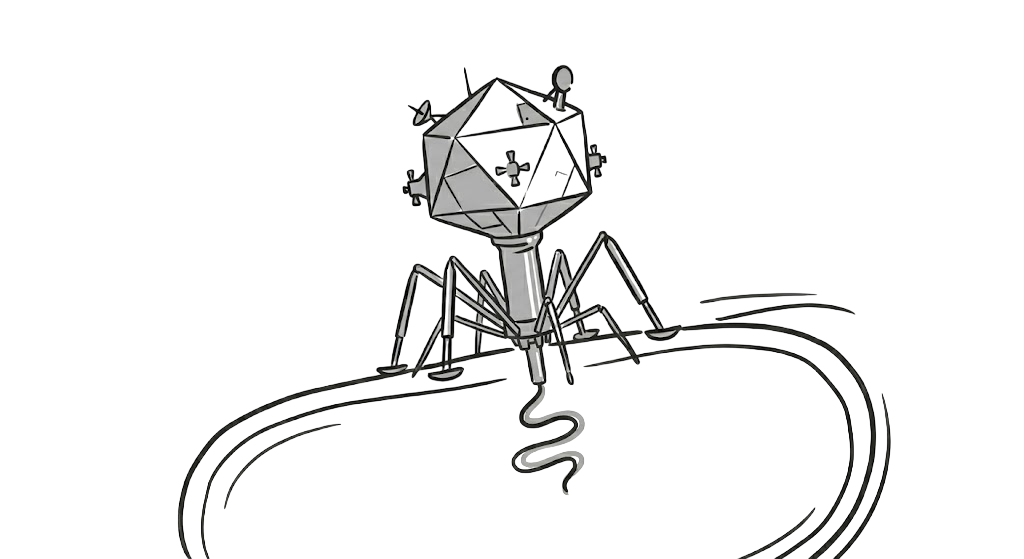
Imagine a world where every devastating flood, every unpredictable crop yield, and every sudden heatwave is treated as a simple arithmetic problem.
This isn’t a historical footnote; for decades, modern infrastructure and global climate policy have operated on a fundamental arrogance: the belief that the Earth is a giant, predictable clockwork machine. As of mid-2026, the reliance on rigid, linear forecasting has cost us trillions of dollars and rendered our traditional ecological defenses increasingly obsolete against a rapidly changing planet.
But while bureaucratic institutions are still trying to force nature into tidy, deterministic spreadsheets, a quiet revolution has been unfolding at the intersection of advanced mathematics and ecology. We are finally embracing the true nature of our world: Complex Dynamical Systems. This isn’t abstract philosophy; it is the mathematics of chaos. It is the realization that nature is not a machine to be controlled, but a non-linear geometry to be navigated.
The Spreadsheet vs. The Storm: A Paradigm Shift
To understand why Chaos Theory is the frontier of 2026 ecological engineering, we have to look at how we’ve been treating the natural world for the last century.
Traditional predictive models are the “straight lines” of the scientific world. When you build a concrete dam or model a city’s drainage system, you assume that if you know the current amount of water, you can perfectly calculate the output. It is an A + B = C mentality. It assumes that a small change in the input will result in a predictably small change in the output.
Nature, however, is a non-linear forge. A specific ecosystem, like the immense, shifting delta of the Sundarbans, does not operate on straight lines. It is a massive web of feedback loops—where mangrove density affects water salinity, which affects tiger populations, which affects soil erosion, which feeds back into mangrove density. In these systems, A + B does not equal C. In these systems, a microscopic shift in one variable can trigger a complete systemic collapse.
The Science: The Lorenz Attractor (A Mathematical Awakening)
A complex natural system looks like an impossibly massive web of statistical variables. To understand it, we must look back to the moment the linear illusion broke.
In the 1960s, a meteorologist named Edward Lorenz was running a computer simulation of global weather. Wanting to save time, he restarted a sequence in the middle of the run. Instead of typing in the exact starting number—which was 0.506127—he rounded it to 0.506. It was a change of less than one-tenth of a percent. A mathematical whisper.
According to linear logic, this tiny rounding error should have produced a slightly different weather forecast. Instead, the simulation injected this microscopic difference into its feedback loops, compounding the error through rapid-fire multiplications. Eventually, the system produced a completely unrecognizable, radically different weather pattern.
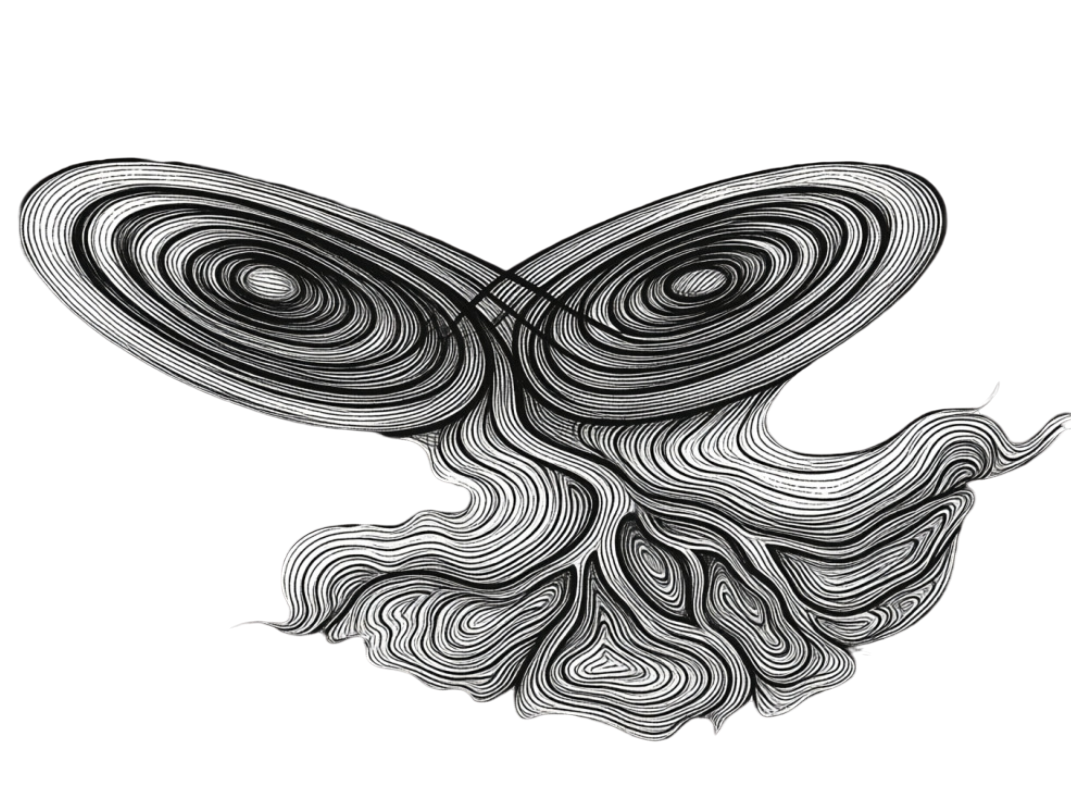
Lorenz had discovered “Sensitive Dependence on Initial Conditions”—what we now call the Butterfly Effect. He proved that in a complex system, the flap of a butterfly’s wings in Brazil truly can set off a tornado in Texas. He mapped this behavior into a 3D graph, creating the “Lorenz Attractor”—a mesmerizing, infinite, butterfly-shaped curve that never intersects itself. It proved that chaos isn’t random noise; it has a hidden, beautiful geometric structure.
The Ecological Legacy: From Weather Models to Global Solutions
While linear thinking feels like “The Only Way” to traditional civil engineers, non-linear dynamics has become the quiet standard for a dedicated subset of ecologists and data scientists.
When major global organizations embraced the convenience of rigid, generalized climate goals, the scientific community—faced with the reality of localized ecological collapse—continued to refine “chaos-aware” models.
For years, policymakers dismissed this work as too complex to implement. However, as 2026 weather anomalies shatter historical records globally, the data is undeniable: the chaoticists were right all along. We are now seeing a “Geometric Ecological Shift,” where an understanding of non-linear mathematics is merging with localized environmental action to create a new standard for human resilience.
The 2026 Update: Mapping the Strange Attractor
The primary reason Chaos Theory wasn’t aggressively applied to ecology sooner was the Computational Problem. Because chaotic systems require mapping millions of compounding variables, scientists couldn’t just run them on standard machines.
Enter the localized compute revolution. In 2026, we are seeing the rise of true “Computational Ecology,” powered by the exact same local GPU clusters used for open-weight AI.
- The Paradigm Shift: Planners are migrating from locked-down, static predictions (e.g., “The water will rise exactly 2 inches”) to mapping “Tipping Points.” We use compute to find the exact threshold where an ecosystem fundamentally flips from a living forest to a barren desert.
- The Hardware Match: Massive local data processing allows ecologists in Bangladesh to map the micro-variables of the Ganges Delta in real-time, holding the massive web of river flows, silt deposits, and monsoon winds in active memory.
- The Execution: Instead of building a rigid, multi-million dollar concrete wall that a chaotic flood will eventually overtop and destroy, engineers use the data to build adaptive, biomimetic floodplains. We use math to absorb the chaos rather than resist it.
We are no longer trying to force the climate into a spreadsheet; we are engineering our societies to flow within its chaotic boundaries.
Evolutionary Steering: Surviving the Tipping Point
One of the most elegant shifts in recent years is a phenomenon called Resilience Engineering.
Critics of chaotic modeling often point out that if the world is truly non-linear, it is inherently unpredictable. If we can’t predict the weather three weeks from now, how can we plan a city for the next fifty years?
This pressure has forced a massive “fitness cost” onto our architectural and ecological thinking. In a landmark shift, scientists realized that while you cannot predict the exact state of a chaotic system, you can perfectly define its boundaries. The Lorenz Attractor shows us that while the exact path of the line is random, it will always stay within the shape of the butterfly.
By mapping the “Strange Attractor” of our local climates, we force our infrastructure into a brilliant evolutionary dead-end: we stop trying to predict the exact date of the next super-cyclone, and instead build systems so inherently resilient that they survive no matter what path the chaotic weather takes.
Conclusion: A Return to Natural Harmony
The “Linear Era” doesn’t have to end in an ecological dark age. Instead, it is forcing us to abandon the hubris of the 20th century in favor of a more sovereign, decentralized, and mathematically honest approach to nature.
By harnessing the mathematics of chaos, we aren’t just finding a replacement for failed concrete dams and inaccurate spreadsheets; we are entering an era of Ecological Intelligence. In this new paradigm, we stop trying to dictate nature’s future and start learning to map its geometry. The mathematics of chaos—once a niche tool for theoretical physicists—is now the cornerstone of a future where human survival is no longer a rigid battle against the elements, but a dynamic, resilient reality.
Written by Abrar Sayeed
Want to go deeper?
- The Lorenz Paradigm – (A gripping breakdown of how Edward Lorenz accidentally discovered the Butterfly Effect and changed physics forever).
- Geometry of the Delta – How the Sundarbans operate as a massive, non-linear strange attractor, and why rigid engineering is destroying it.
- Journal of Computational Ecology: 2026 Perspective – A meta-analysis of how local AI clusters are being repurposed to map environmental tipping points.
- Resilience over Resistance – Exploring the strategy of transitioning from concrete, linear flood defenses to adaptive, biomimetic infrastructure.