
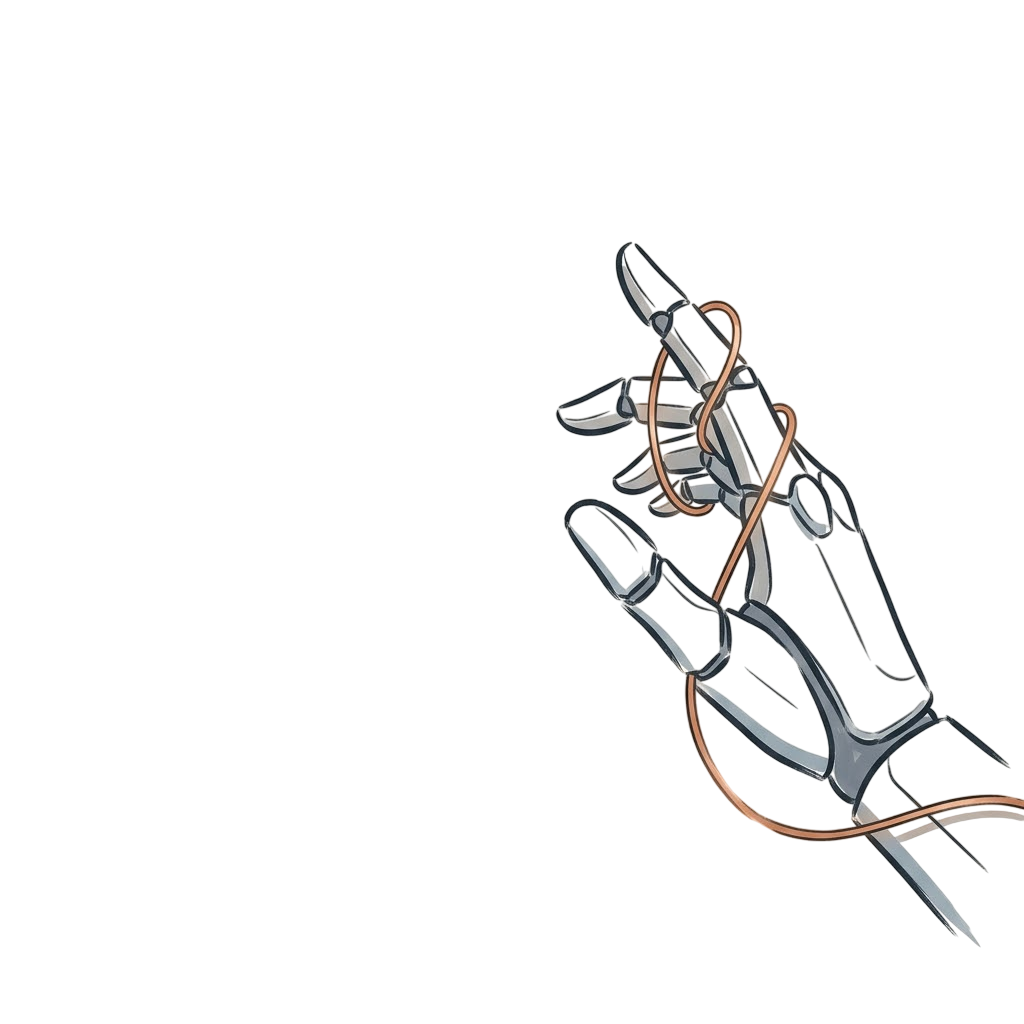
And honestly? It should scare you a little.
Okay so here’s something that kept me up at night recently.
We’re building robots at an insane pace right now. Factory robots, surgical robots, delivery drones,
self-driving cars, humanoid robots that can fold laundry — the future is basically arriving in real time. And it’s electric. All of it.
But here’s the thing nobody’s really talking about at dinner tables yet:
All of that needs copper. A LOT of copper. And we’re running out.
Wait, Copper? That Old Thing?
Yes. That boring, reddish-orange metal your grandad used to find in old wiring. Copper.
It’s in every motor. Every circuit board. Every power cable. Every EV battery system. Every robot arm
that moves with any kind of precision. Copper is basically the blood of modern electronics — it carries
electricity better than almost anything else we have at a reasonable cost.
And right now, the world is demanding more of it than ever before in human history.
The International Energy Agency estimated that to hit global clean energy and electrification goals, we’d
need to more than double our copper supply by 2035. Double. In about a decade.
Here’s the problem — mines don’t work that fast.
The Ground Is Not Keeping Up With Us
Finding copper isn’t like ordering something online. You don’t just decide to dig more and get results next week. Opening a new copper mine from scratch takes anywhere from 10 to 20 years — permits, drilling, environmental studies, infrastructure, the whole thing/
And the copper that IS left in the ground? It’s getting harder to reach. The easy stuff has already been dug up. What’s left is deeper, lower quality, and more expensive to process.
We’re essentially asking the earth to run faster while it’s already tired.
Meanwhile, on the other side of this equation — robots, EVs, solar panels, wind turbines, charging
stations — all of these are growing exponentially. A single electric vehicle uses roughly 2.5 to 4 times
more copper than a regular petrol car. A humanoid robot? The wiring, the actuators, the sensors — it’s
copper all the way down.
We are sprinting toward a future that requires a material we don’t have enough of. That’s… a problem.
So What Happens to the Robot Revolution?
This is where it gets really interesting to me.
There are a few directions this could go, and honestly, some of them are kind of exciting even if the
reason we’re going there is a bit scary.
1. Robots get more expensive before they get cheaper.
Supply goes tight, prices go up, manufacturers feel the squeeze. That might slow down how fast robots
actually show up in hospitals, warehouses, and homes. The timeline we imagined? It might stretch
2. Engineers get creative — and that’s always fun to watch.
Necessity is basically the mother of every cool invention. Already, researchers are seriously looking at
aluminum as a partial copper substitute in some wiring. It’s lighter, it’s way more abundant — but it’s
trickier to work with and not quite as conductive. The engineering challenge of making aluminum work as well as copper in complex robotic systems? That’s genuinely fascinating problem-solving happening right now.
3. Wireless power becomes non-negotiable.
If you can cut down the physical wiring in a robot — through wireless energy transfer, better power
electronics, smarter circuit design — you reduce your copper dependency. This is already pushing some
incredible research in resonant inductive coupling and ultra-efficient power delivery systems.
4. Recycling copper becomes a gold rush.
Old electronics, scrapped cars, torn-down buildings — all of that has copper in it. Right now, only about
30-35% of copper gets recycled globally. If we can push that number up aggressively, it buys us time.
Urban mining — basically treating old cities and electronics as ore deposits — is starting to be taken very
seriously. It’s a weird and cool idea when you think about it.
The Countries Sitting on the Gold (Copper)
Here’s a geopolitical layer that I find kind of wild.
About 40% of the world’s copper reserves sit in Chile and Peru. The Democratic Republic of Congo is
a massive source too. These countries are suddenly holding enormous cards in a game that the entire tech world is playing.
What happens to robot manufacturing timelines when there’s political instability in a major
copper-producing region? What happens to the price of a robot arm when a mine goes on strike?
The robot revolution isn’t just an engineering story. It’s a geography story. A politics story. A resource
story.
We built this dazzling electric future and kind of forgot to check if we had enough of the basic stuff to
make it run.
I’m Not Saying the Robots Aren’t Coming
They are. I genuinely believe that. The engineering momentum is too strong, the investment is too deep,
the demand is too real.
But the path there is bumpier than the glossy keynote presentations suggest. The smartest engineers in the robotics space aren’t just thinking about algorithms and actuators — they’re thinking about supply chains, material science, and what happens when the thing you need most is the thing everyone else needs too.
Copper is the quiet bottleneck of the robot revolution. And the people who figure out how to work around it — whether through new materials, smarter design, or better recycling — those are the people who are going to shape what the future actually looks like.
That’s the part I can’t stop thinking about
Because it’s not just a problem. It’s an open door
If this made you think, share it with someone who thinks robots are just a software problem. The hardware always has the last word.
Written by Fida Wafiq